
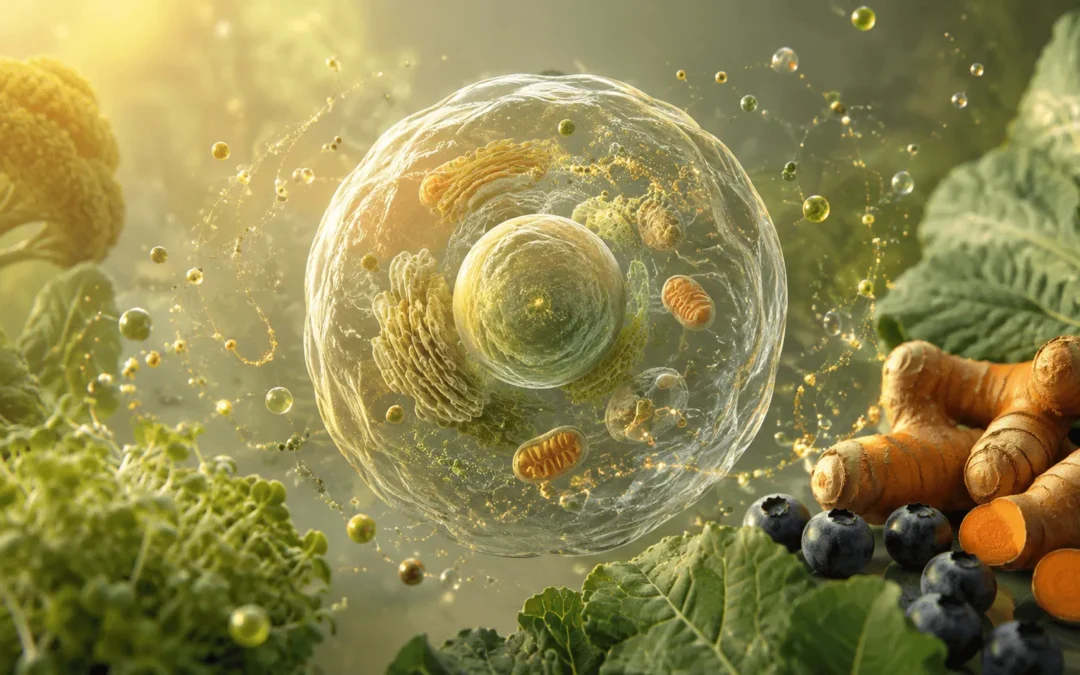
Nrf2 is one of the body’s important cellular defense regulators. It is a transcription factor, which means it can influence which genes a cell switches on in response to changing conditions.
Its full name is nuclear factor erythroid 2-related factor 2, often written as NRF2 or Nrf2. Rather than acting like an antioxidant that directly neutralizes reactive molecules, Nrf2 helps coordinate the production of enzymes and protective proteins involved in antioxidant defense, glutathione metabolism, cellular stress responses, and the processing of certain potentially harmful compounds.
That distinction is important. Nrf2 is not simply another antioxidant. Think of it more like a cellular control system that can help organize the body’s own protective response.
Under ordinary conditions, Nrf2 activity is tightly regulated. When cells encounter certain forms of oxidative or electrophilic stress, however, the pathway can become more active. Nrf2 can then move into the cell nucleus and influence genes containing antioxidant response elements, or AREs.
This is one reason Nrf2 has become an important area of research in oxidative stress, nutrition, inflammation, healthy aging, and cellular health.
Understanding Nrf2 also requires some balance. Reactive oxygen species are not always harmful, and more Nrf2 activity is not automatically better. The goal of healthy cellular biology is regulation and balance, not eliminating every oxidant or keeping a stress response permanently switched on.
Understanding how does nrf2 work
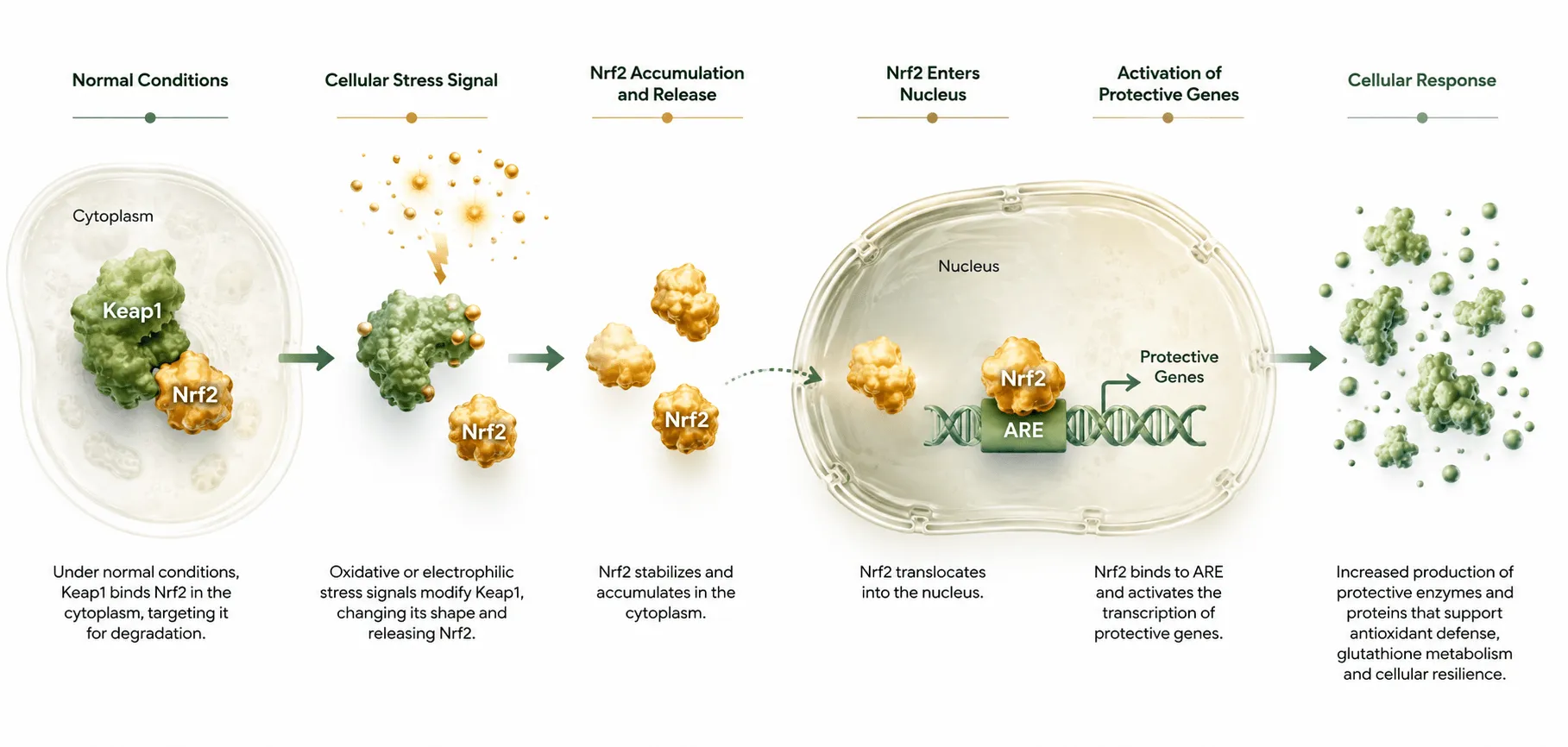
To understand how does nrf2 work, it helps to meet another protein called Keap1.
Under normal conditions, Keap1 helps keep Nrf2 under tight control. Nrf2 is continually produced and normally targeted for degradation, preventing unnecessary accumulation.
When cells encounter certain oxidative or electrophilic signals, chemical changes can occur in Keap1. This changes the way Nrf2 is regulated and allows newly produced Nrf2 to accumulate.
Nrf2 can then travel into the nucleus, where it works with other proteins and interacts with DNA sequences known as antioxidant response elements (AREs). This can increase the expression of numerous genes involved in cellular protection.
In simplified terms:
Cellular stress signal → altered Keap1 regulation → Nrf2 accumulation → movement into the nucleus → activation of protective genes
The actual biology is considerably more complex, and Nrf2 can also be regulated through pathways beyond Keap1. But this sequence provides a useful starting point for understanding why Nrf2 is often described as a regulator of cellular defense.
The nrf2 antioxidant pathway
The nrf2 antioxidant pathway helps cells adjust their internal protective systems when conditions change.
This is different from consuming an antioxidant molecule that can participate directly in chemical reactions. Nrf2 instead influences the expression of genes involved in antioxidant and cytoprotective systems.
Among the proteins and enzymes associated with Nrf2 signaling are those involved in glutathione synthesis and use, NAD(P)H quinone oxidoreductase 1 (NQO1), heme oxygenase 1 (HO-1), glutathione S-transferases and other protective processes.
This coordinated response is why researchers often refer to Nrf2 as a master regulator of cellular antioxidant defense.
Understanding the nrf2 oxidative stress pathway
The nrf2 oxidative stress pathway makes more sense when oxidative stress itself is understood.
Cells naturally produce reactive oxygen species, or ROS, as part of normal metabolism. ROS are not automatically harmful. At controlled levels, they can participate in normal cell signaling and physiological adaptation.
Oxidative stress develops when the production of reactive species and the systems responsible for controlling them become sufficiently imbalanced that cellular components may be damaged.
Nrf2 is one of the mechanisms cells use to respond to this challenge. By increasing the expression of protective genes, Nrf2 can strengthen cellular capacity for handling oxidative and electrophilic stress.
This is part of supporting your body’s natural cellular defense, rather than trying to eliminate all oxidation from the body.
How nrf2 glutathione Relates to Antioxidant Defense
The relationship between nrf2 glutathione is particularly important because glutathione is one of the body’s major intracellular antioxidant molecules.
Glutathione is made from three amino acids: glutamate, cysteine and glycine. Cells use it in numerous reactions that help maintain redox balance and deal with reactive compounds.
Nrf2 can regulate genes involved in producing and using glutathione. For example, Nrf2 influences expression of components of glutamate-cysteine ligase (GCL), an important enzyme in glutathione synthesis.
This means Nrf2 does not simply “provide” glutathione. Instead, the pathway helps regulate some of the cellular machinery required to maintain glutathione metabolism.
That relationship demonstrates an important feature of Nrf2: its effects involve networks of enzymes and cellular processes rather than one isolated antioxidant.
Key nrf2 activation benefits
Discussions of nrf2 activation benefits should distinguish biological mechanisms from proven health outcomes.
At the cellular level, Nrf2 activation can increase expression of genes involved in antioxidant defense, glutathione metabolism, xenobiotic processing and other stress response functions. Researchers have consequently investigated Nrf2 in relation to inflammation, mitochondrial function, metabolic health, aging and numerous diseases.
However, demonstrating that Nrf2 performs these functions inside cells does not mean that deliberately increasing Nrf2 with a food or supplement will necessarily produce a particular clinical benefit.
A more accurate way to understand the potential benefits of Nrf2 activation is that appropriately regulated Nrf2 activity helps cells respond to stress and maintain cellular homeostasis.
The Connection Between nrf2 inflammation and Cellular Health
The relationship between nrf2 inflammation is complex.
Oxidative stress and inflammatory signaling frequently interact. Nrf2 regulated systems can influence cellular redox conditions, while Nrf2 also interacts with pathways involved in inflammatory responses.
For example, research has explored interactions between Nrf2 and NF-κB, an important regulator of inflammation. These pathways do not function as simple on and off switches; they participate in interconnected cellular networks.
For everyday wellness education, the key point is that Nrf2 is involved in maintaining the cellular environment in which oxidative and inflammatory signals are managed.
This should not be interpreted to mean that activating Nrf2 is a treatment for inflammatory disease. Much of the detailed evidence describing these interactions comes from mechanistic and preclinical research.
The Role of nrf2 mitochondria in Cellular Health
The connection between nrf2 mitochondria is another developing area of research.
Mitochondria are often described as the cell’s powerhouses because they generate much of the ATP cells use for energy. Their role goes well beyond energy production, however. Mitochondria participate in metabolism, signaling, cell survival and redox regulation.
Because mitochondrial activity can generate reactive oxygen species, cells need mechanisms for maintaining redox balance around these structures.
Nrf2 influences multiple systems relevant to mitochondrial health and cellular stress responses. Research has connected Nrf2 signaling with mitochondrial function, quality control, biogenesis and protection from excessive oxidative stress.
Again, the relationship is not as simple as “activating Nrf2 improves mitochondria.” Nrf2 is one component within a much larger network that helps cells adapt to changing metabolic conditions.
Understanding things that cause oxidative stress
There are many things that cause oxidative stress, but context and dose matter.
Potential contributors can include:
- Cigarette smoke
- Air pollution and other environmental exposures
- Excessive ultraviolet radiation
- Certain toxins and chemicals
- Some inflammatory processes
- Heavy or prolonged physiological stress
- Excessive production of reactive species during particular metabolic conditions
Exercise deserves special attention because it demonstrates why oxidation should not automatically be labelled harmful.
Physical activity can temporarily increase reactive oxygen species. Yet these molecules can act as signals that contribute to beneficial adaptations to exercise. Regular physical activity also strengthens physiological defense systems.
The goal, therefore, is not to create a body with zero reactive oxygen species. That would interfere with normal biology. Healthy redox balance depends on the body being able to produce, use and control reactive species appropriately.
What Is an nrf2 activator?
An nrf2 activator is a substance or stimulus capable of increasing activity of the Nrf2 pathway.
Many experimental Nrf2 activators work by affecting Keap1, reducing its ability to target Nrf2 for degradation. Nrf2 can then accumulate and influence its target genes.
Scientists have identified many compounds that affect this pathway in laboratory models. Some occur naturally in foods, while others are pharmacological agents.
But the phrase “Nrf2 activator” needs context.
A compound that activates Nrf2 in cultured cells does not necessarily produce the same effect after a person eats it. Digestion, absorption, metabolism, dose, tissue distribution and individual biology can all influence what actually happens in humans.
That gap between laboratory mechanisms and real world human effects is particularly important when evaluating foods and supplements marketed around Nrf2.
How to activate nrf2 naturally
People searching how to activate nrf2 naturally often encounter lists of foods, herbs and phytochemicals.
There is legitimate scientific interest in this area. Plant compounds including sulforaphane, curcumin and resveratrol have been investigated for their ability to influence Nrf2 related signaling.
However, human evidence is still developing.
A systematic review of human intervention studies examined 18 trials involving 12 phytochemicals. Although some studies reported increases in Nrf2 activity, many had methodological limitations, and the reviewers concluded that high quality evidence demonstrating phytochemical activation of Nrf2 in humans remained limited.
This is a useful reminder that promising mechanisms are not the same as guaranteed results.
From a general wellness perspective, eating a varied diet rich in vegetables, fruits and other nutrient dense plant foods has well established nutritional value without requiring the assumption that every benefit occurs through Nrf2.

Exploring nrf2 activator foods
Commonly discussed nrf2 activator foods include cruciferous vegetables because they can provide precursors to isothiocyanates such as sulforaphane.
Examples include:
- Broccoli
- Broccoli sprouts
- Brussels sprouts
- Cabbage
- Kale
- Cauliflower
- Mustard greens
Broccoli sprouts receive particular attention because they can contain glucoraphanin, which can be converted to sulforaphane through the action of the enzyme myrosinase.
Other foods and beverages containing phytochemicals studied in connection with Nrf2 include turmeric, grapes and berries, and coffee.
It is more accurate to say that these foods contain compounds studied for their effects on Nrf2 signaling than to promise that eating a specific amount will reliably “switch on” Nrf2 in every person.
Exploring nrf2 activator plants
Research into nrf2 activator plants extends across many phytochemicals.
Curcumin from turmeric, resveratrol associated with grapes, and sulforaphane derived from cruciferous vegetables are among the better known examples. Various flavonoids, isothiocyanates and other plant compounds have also shown effects on Nrf2 related signaling in experimental research.
Laboratory findings have generated considerable interest in the idea that plants may influence gene expression rather than merely supplying conventional vitamins and minerals.
Yet human research remains less definitive. Bioavailability can vary substantially, and the concentrations used in laboratory experiments may not reflect what human tissues experience after eating ordinary foods.
Plants should therefore be viewed as part of an overall nutritious dietary pattern rather than as precise tools for manipulating one cellular pathway.
How to activate nrf2 pathway
When considering how to activate nrf2 pathway, it is helpful to move away from the idea that the pathway must be continuously maximized.
Nrf2 evolved as a dynamic response system. Its activity rises and falls as cellular conditions change.
Some dietary phytochemicals, physical activity and other physiological stimuli have been investigated for their effects on Nrf2 signaling. But these influences occur within a much larger biological system involving sleep, nutrition, metabolism, environmental exposure, physical activity and overall health.
A sensible wellness strategy therefore focuses on supporting normal cellular function rather than attempting to keep Nrf2 permanently activated.
That distinction becomes even more important when supplements enter the discussion.
Understanding nrf2 supplements
Nrf2 supplements are generally products containing ingredients promoted for their potential influence on Nrf2 signaling or downstream antioxidant systems.
Ingredients commonly discussed in this category include phytochemicals such as sulforaphane or broccoli derived compounds, curcumin and various botanical extracts.
Some multi ingredient formulations are also marketed around the concept of Nrf2 activation.
The scientific question is not simply whether an ingredient affects Nrf2 in a laboratory experiment. Useful questions include:
- Has the ingredient been tested in humans?
- Was Nrf2 activity actually measured?
- Was the study randomized and placebo controlled?
- Was the dose comparable with the product being considered?
- Were meaningful health outcomes measured?
- Have the results been replicated?
- Are there safety or medication interaction concerns?
These questions help separate an interesting biological mechanism from a demonstrated supplement benefit.
What to Know About best nrf2 activator supplements
The phrase best nrf2 activator supplements implies that available products can be reliably ranked according to how effectively they activate Nrf2 and improve health.
Current evidence does not support such a simple ranking.
A supplement may contain an ingredient with strong mechanistic evidence yet limited human evidence. Another may change a biomarker without demonstrating a meaningful improvement in health outcomes.
For example, sulforaphane is one of the most widely studied food derived compounds associated with Nrf2. Curcumin and resveratrol have also received substantial research attention. Yet the systematic review of human trials described earlier found inconsistent results and limitations in study quality.
There are also multi ingredient products positioned around Nrf2 science. Protandim Nrf2 Synergizer, for example, has been evaluated in human research, but the results should be described proportionately. A randomized placebo controlled trial in runners did not find an improvement in 5 km performance or its primary oxidative stress outcome after 90 days. Other human research has likewise produced mixed findings depending on the population and outcomes studied.
For this reason, “best” should not simply mean the supplement with the strongest marketing claim. Product quality, ingredient doses, human evidence, safety, medication interactions and the specific outcome a person hopes to support all matter.
Understanding nrf2 supplement benefits
Potential nrf2 supplement benefits are often described using the underlying functions of the Nrf2 pathway: antioxidant defense, cellular stress response, glutathione related processes and inflammatory signaling.
The crucial distinction is between what Nrf2 does and what a particular supplement has been demonstrated to do in people.
If Nrf2 regulates an antioxidant enzyme, it does not automatically follow that every supplement associated with Nrf2 will increase that enzyme enough to improve health. Likewise, showing Nrf2 activation in cells does not prove that taking the substance produces a clinically meaningful outcome.
This does not make Nrf2 supplement research unimportant. It means each formulation and claim needs to be evaluated on its own evidence.
Supplements can also interact with medications or be inappropriate in particular circumstances. People who take prescription medicines, are pregnant or breastfeeding, have significant medical conditions, or are undergoing cancer treatment should discuss concentrated botanical or Nrf2 targeted supplements with an appropriate healthcare professional.
The Relationship Between nrf2 detox and Antioxidant Defense
The phrase nrf2 detox can be misleading if “detox” is interpreted as a vague process of flushing unspecified toxins from the body.
The actual biology is much more interesting.
Nrf2 regulates genes involved in enzymes traditionally described as phase II detoxification enzymes, along with transporters and antioxidant systems. These processes can help cells chemically modify and handle certain foreign compounds and reactive metabolites so they can be processed and eliminated more effectively.
Examples of Nrf2 regulated systems include some glutathione S-transferases and other enzymes involved in cellular defense.
However, Nrf2 is only one part of the body's much broader handling of substances. The liver, kidneys, gastrointestinal tract, lungs and other tissues all participate in metabolism and elimination through many pathways.
So when discussing “Nrf2 detox,” a scientifically useful interpretation is Nrf2's role in regulating certain cellular defense, conjugation and xenobiotic processing genes.
It should not be interpreted as evidence that an Nrf2 product cleanses the body of unspecified “toxins.”
Is nrf2 safe?
The question is nrf2 safe? requires an important distinction: Nrf2 is a normal part of human biology, not an inherently foreign substance.
Normal, tightly regulated Nrf2 signaling is an important component of cellular stress responses.
The safety question becomes more complicated when discussing deliberate or prolonged activation of the pathway with drugs or concentrated supplements.
Nrf2 biology is context dependent. Transient activation in normal cells can support protective stress responses. But persistent Nrf2 activation is not automatically beneficial.
Cancer research provides an important example. Some cancer cells develop mutations or other changes that keep Nrf2 signaling abnormally active. That can help malignant cells tolerate stress and, in some settings, resist cancer therapies.
This does not mean that eating broccoli or other Nrf2 associated foods causes cancer. Nor does it demonstrate that ordinary dietary Nrf2 signaling is dangerous. It demonstrates why the simplistic idea that “more Nrf2 is always better” is biologically inaccurate.
Healthy Nrf2 signaling is about regulation.
Understanding nrf2 activator side effects
Potential nrf2 activator side effects depend on the specific substance being used.
There is no universal side effect profile for “Nrf2 activation” because an Nrf2 activator could be a food derived compound, concentrated botanical extract, dietary supplement or prescription drug. Each has its own pharmacology, dose and safety considerations.
Some concentrated phytochemicals may cause digestive symptoms or interact with medications. Pharmaceutical Nrf2 modifying agents have their own specific indications and adverse effect profiles and should not be treated as interchangeable with dietary ingredients.
There is also a broader scientific caution: substances described as Nrf2 activators can act through pathways other than Nrf2. An observed benefit or adverse effect therefore cannot automatically be attributed to Nrf2 itself.
For people using ordinary foods as part of a balanced diet, the question is very different from deliberately taking high doses of concentrated compounds.
Why Nrf2 Is Important for Cellular Health
Nrf2 is important because cells constantly have to adapt.
Normal metabolism, exercise, environmental exposures, immune activity and many other processes can alter the cellular redox environment. The body therefore needs systems capable of sensing change and adjusting its defences.
The Keap1-Nrf2 system is one of those systems.
When appropriate signals occur, Nrf2 can help coordinate genes involved in antioxidant defense, glutathione metabolism, cellular protection and the handling of certain reactive or foreign compounds.
That is a more useful way to understand Nrf2 than thinking of it as an antioxidant switch that should always be turned up.
The emerging science of Nrf2 also illustrates a larger principle of nutrition and cellular health: the body has sophisticated internal defense networks. Foods and phytochemicals may interact with those networks, but laboratory mechanisms need to be distinguished carefully from demonstrated benefits in humans.
For everyday wellness, the goal is not maximum Nrf2 activation. It is supporting the body's ability to maintain balance and respond appropriately to stress.
That is the real reason Nrf2 matters: it is part of the remarkable network involved in supporting your body’s natural cellular defense.
References and Sources
- Ma Q. Role of Nrf2 in Oxidative Stress and Toxicity. Annual Review of Pharmacology and Toxicology. 2013/2015 PMC publication. A detailed review of Nrf2 regulation, oxidative stress responses and the context dependent nature of the pathway.
- Pall ML, Levine S. Nrf2, a master regulator of detoxification and antioxidant, anti-inflammatory and other cytoprotective mechanisms. Research literature on Nrf2 signaling and cellular protection.
- Lu SC. Glutathione Synthesis. Biochimica et Biophysica Acta. Reviews the regulation of glutathione synthesis, including Nrf2 regulation of GCLC and GCLM.
- Zhang DD and colleagues. Reviews of the Keap1-Nrf2-ARE pathway and regulation of phase II detoxification and antioxidant genes.
- Clifford T, Acton JP, Cocksedge SP, Davies KAB, Bailey SJ. The effect of dietary phytochemicals on nuclear factor erythroid 2-related factor 2 (Nrf2) activation: a systematic review of human intervention trials. Molecular Biology Reports. 2021. The review found limited high quality human evidence for phytochemical activation of Nrf2.
- Sporn MB, Liby KT. NRF2 and cancer: the good, the bad and the importance of context. Nature Reviews Cancer. Reviews the context dependent protective and potentially tumor supporting roles of Nrf2.
- Burnham EL, McCord JM, Bose S, et al. Protandim does not influence alveolar epithelial permeability or intrapulmonary oxidative stress in human subjects with alcohol use disorders. American Journal of Physiology Lung Cellular and Molecular Physiology. 2012.
- Ueberschlag SL, Seay JR, Roberts AH, et al. The Effect of Protandim Supplementation on Athletic Performance and Oxidative Blood Markers in Runners. PLOS ONE. 2016.